
What Is Spinal Stenosis?
Spinal stenosis is a condition in which the spaces within the spine become narrower, putting pressure on the spinal cord or nearby nerves. It most commonly affects the lower back (lumbar spine) and the neck (cervical spine), and is often associated with aging and degenerative changes in the spine.
Many people experience mild symptoms at first, but as the condition progresses, everyday activities such as walking, standing, or even sleeping may become increasingly uncomfortable.
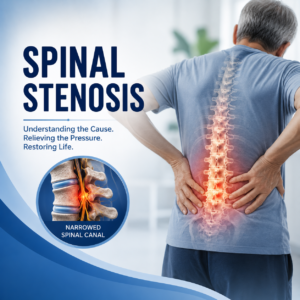 Common Symptoms of Spinal Stenosis
Symptoms vary depending on which part of the spine is affected, but common signs include:
- Lower back pain
- Pain, numbness, or tingling in one or both legs
- Weakness in the legs or feet
- Difficulty walking long distances
- Pain that improves when sitting or leaning forward
- Balance problems in more advanced cases
If symptoms continue to worsen, it’s important to seek evaluation from a pain management specialist.
What Causes Spinal Stenosis?
Several conditions can contribute to spinal stenosis, including:
- Age-related wear and tear
- Arthritis affecting the spine
- Herniated discs
- Thickened spinal ligaments
- Bone spurs
- Previous spinal injuries
Although spinal stenosis is more common in adults over 50, younger individuals may develop it due to injury or congenital spinal abnormalities.
How Is Spinal Stenosis Diagnosed?
Your physician will review your medical history, perform a physical examination, and may recommend imaging studies such as:
- X-rays
- MRI scans
- CT scans
These tests help identify the location and severity of nerve compression.
Non-Surgical Treatment Options
Many patients find relief without surgery. Depending on the severity of your symptoms, treatment may include:
- Physical therapy to improve flexibility and strength
- Anti-inflammatory medications
- Activity modifications
- Epidural steroid injections to reduce nerve inflammation
- Image-guided spinal injections
- Other minimally invasive interventional pain management procedures
These treatments are designed to relieve pain, improve mobility, and help patients return to their normal activities.
When Should You See a Pain Management Specialist?
Consider scheduling an evaluation if you experience:
- Back or leg pain lasting several weeks
- Difficulty standing or walking for extended periods
- Numbness or weakness in your legs
- Pain that limits your daily activities
- Symptoms that have not improved with conservative care
Early diagnosis and treatment may help prevent symptoms from worsening and improve your quality of life.
Find Relief at Legacy Integrative Pain
Living with spinal stenosis doesn’t mean you have to give up the activities you enjoy. At Legacy Integrative Pain, our experienced team develops personalized treatment plans using advanced, minimally invasive techniques to help relieve pain and restore function.
If you’re experiencing symptoms of spinal stenosis, contact Legacy Integrative Pain to schedule a consultation and learn about treatment options that may help you move more comfortably.